

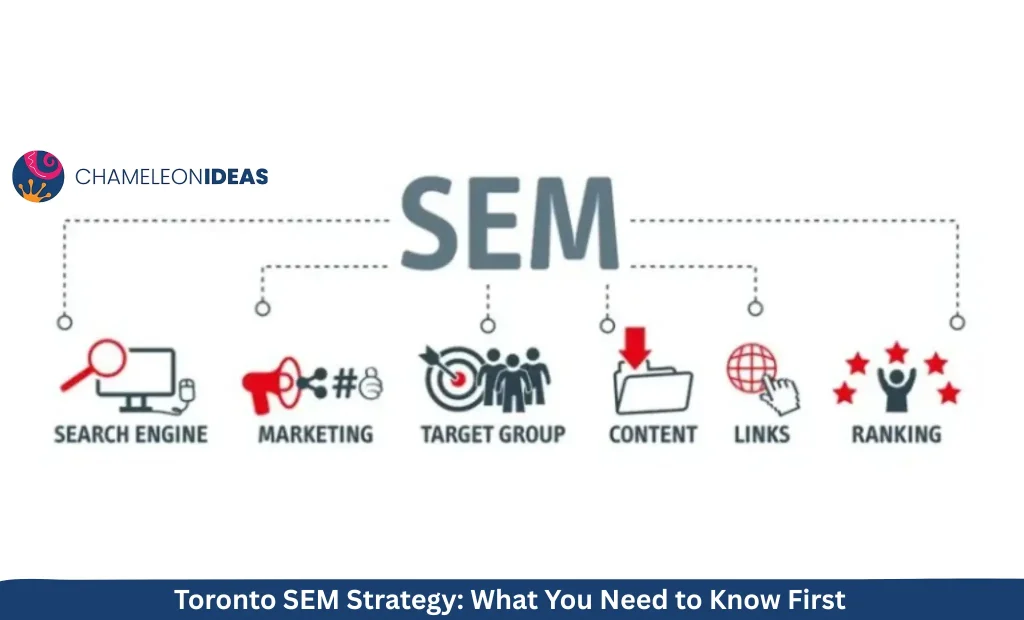
Search engine marketing (SEM) has become a critical component of modern digital strategies, especially for competitive regions like Toronto. Businesses that want visibility on Google need more than a sleek website—they need an efficient, well-structured advertising approach that targets the right users at the right time. If you’re also considering SEM for your Calgary-based business, it’s important to understand the unique considerations for this market.
This article breaks down the technical side of search engine marketing in Toronto, helping you understand how to structure your campaigns, what tools matter, and how to align SEM with measurable business goals.
Content Insights
Toggle1. What Exactly Is Search Engine Marketing?
Search engine marketing refers to the use of paid advertising on search engines to appear in high-visibility areas of the search results. It’s often used interchangeably with pay-per-click (PPC), though technically SEM encompasses both paid and organic strategies.
In practice, SEM includes:
- Google Search Ads (Text-based)
- Display Network Ads (Banners, responsive images)
- Google Shopping Ads (Product Listings)
- YouTube Ads
- Remarketing Campaigns
The emphasis is on immediate visibility and fast data, unlike SEO which takes time to build.
2. The SEM Funnel: How Users Interact With Paid Search
Understanding the search funnel is key to designing targeted campaigns:
- Top of Funnel (Awareness): General, informational keywords (e.g., “best digital agencies in Toronto”)
- Middle of Funnel (Consideration): Comparison and intent-based searches (e.g., “Google Ads agency near me”)
- Bottom of Funnel (Conversion): Action-driven keywords (e.g., “hire PPC expert Toronto”)
A well-structured SEM campaign should map keywords, ads, and landing pages to these intent stages.
3. How SEM Works in the Context of Toronto’s Market
Toronto is home to thousands of businesses, making the local ad space extremely competitive.
Challenges include:
- High cost-per-click (CPC) in industries like law, real estate, healthcare
- Competing with both local and national brands
- Diverse search behavior due to the city’s multicultural demographics
Localized SEM strategies include:
- Geo-targeting by postal code, city radius, or language
- Creating location-specific ad groups
- Bidding adjustments for high-performing neighborhoods
4. Key SEM Metrics You Must Track
Effective SEM requires constant monitoring of data and optimization. Some of the most critical technical metrics include:
- CTR (Click-Through Rate): Measures engagement with your ad copy
- CPC (Cost Per Click): Average amount paid per click
- Conversion Rate: % of clicks resulting in a form fill, call, or purchase
- Quality Score: Google’s rating based on ad relevance, landing page, and CTR
- Impression Share: % of times your ad shows compared to the total available.
5. Common Tech Stacks Used in Toronto Website Projects
Your account structure significantly affects campaign performance. A poorly organized account can waste ad spend and obscure data insights.
Best practices for SEM structure:
- Campaigns by objective or product line
- Ad groups by keyword theme or geography
- Multiple responsive search ads per ad group
- SKAGs (Single Keyword Ad Groups) for high-control campaigns
This modular setup enhances optimization, testing, and budget control.
6. The Importance of Landing Page Relevance
Google Ads doesn’t just evaluate your ads—they assess your landing pages too.
Landing page technical best practices:
- Fast load time (<3 seconds)
- Mobile responsiveness
- Content relevance to keyword/ad
- Strong CTA (Call to Action)
- UTM parameters for analytics tracking
Failure to align landing pages with ads can reduce Quality Score and inflate CPC.
7. SEM Tools That Power Local Campaigns in Toronto
A technical SEM strategy needs the right set of tools:
- Google Ads Editor: For bulk campaign edits
- Google Tag Manager (GTM): Track events, form fills, and button clicks
- Google Analytics 4 (GA4): Analyze user behavior and conversion paths
- Looker Studio: Build custom SEM dashboards
- SEMrush/Ahrefs: Spy on competitor paid keywords
- Optmyzr/WordStream: Automate bid adjustments and testing
8. SEM Budgeting: What You Can Expect in the Toronto Market
CPC rates in Toronto depend heavily on industry and competition
General Toronto CPC Benchmarks:
- Legal: $8–$20
- Dental/Medical: $4–$10
- Home Services (Plumbing, HVAC): $5–$12
- Retail/Ecommerce: $1–$5
Budget tips:
- Allocate 10–30% for experimentation (A/B testing)
- Use dayparting to show ads during active hours
- Consider seasonality and local events
9. SEM and SEO: A Technical Duo
SEM delivers short-term wins, while SEO builds long-term traffic. In Toronto, combining both strategies offers full funnel visibility.
How to integrate:
- Share keyword research between teams
- Use SEM data to identify high-converting queries for SEO
- Test page layouts and copy with SEM before SEO implementation
- Use retargeting ads to bring SEO visitors back
Search Engine Marketing in Toronto Must Be Data-Led and Locally-Tailored
Running SEM campaigns in Toronto is not about set-it-and-forget-it. It’s a technical discipline that requires clear strategy, constant testing, and geographic intelligence.
By building a well-structured, intent-driven SEM account with hyper-localized targeting, Toronto businesses can increase visibility, reduce ad waste, and convert at a higher rate.